Inspect each elevation as its own moisture environment
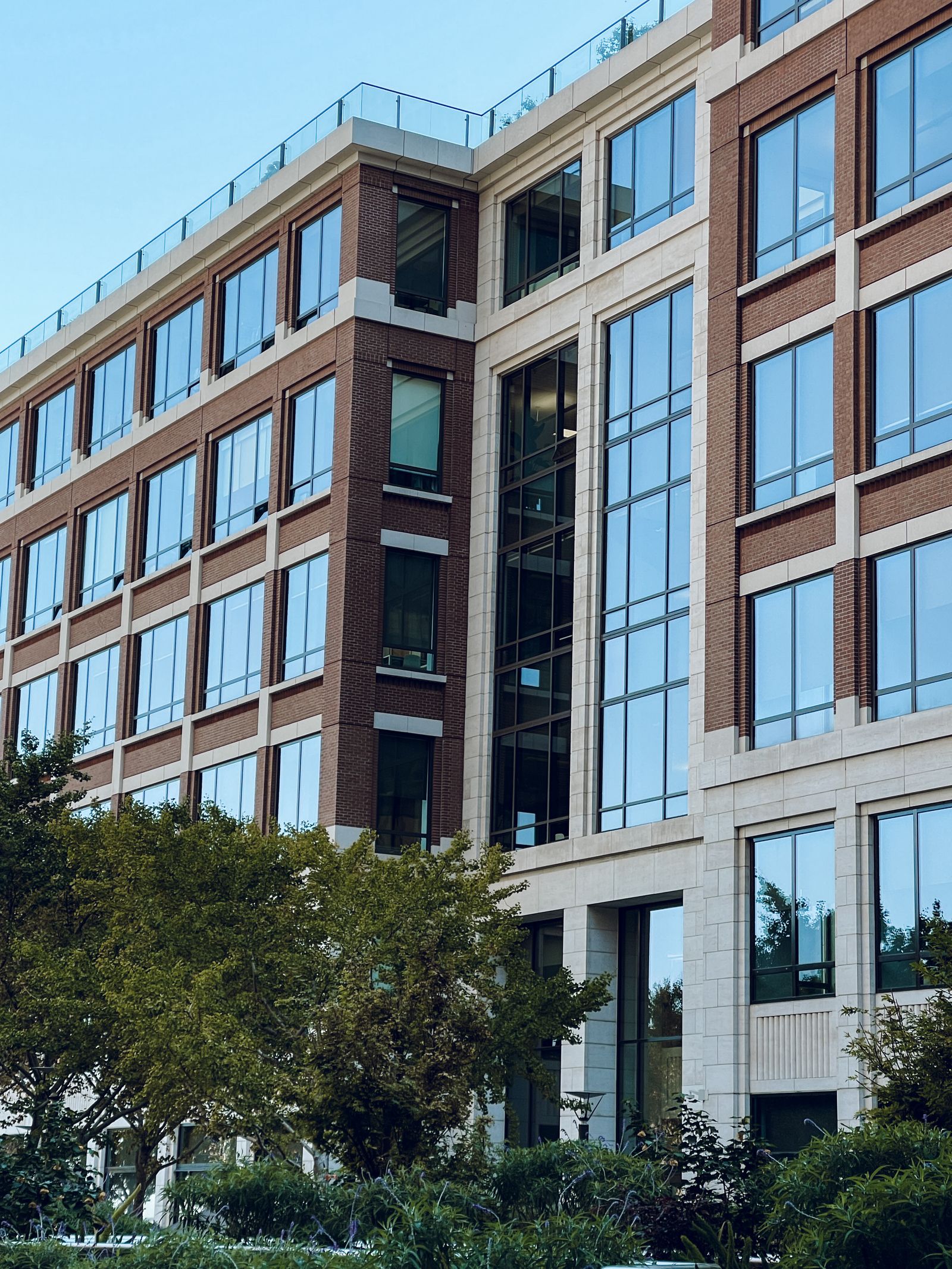
Seattle rain is seasonal as well as frequent. The City of Seattle's hazard analysis describes a strong cool-season pattern, with more than three quarters of annual precipitation falling from October through March. That does not mean exterior cleaning stops for half the year. It means a recurring plan should account for wet forecasts, shorter drying windows, roof drainage, wind-driven rain, and the way shaded walls can remain damp after the sidewalk looks dry. A south or west exposure may dry differently from a north wall, recessed court, alley return, or wall beneath overhanging trees.
Moisture patterns often explain why one area becomes visibly stained before the rest. Overflow below a scupper, repeated runoff beneath a coping joint, splashback along a narrow planting bed, or water held on a deep ledge can create localized streaks and green or dark growth. Cleaning can improve compatible surface growth and ordinary film, but it does not correct failed flashing, blocked drainage, open joints, leaking gutters, or chronic water entry. Those conditions should be documented for the property team and referred to the appropriate building-envelope, roofing, drainage, or material professional instead of being hidden beneath a promise that washing will solve the source.
The initial survey should photograph each elevation, note orientation and shade, identify roof leaders and discharge points, and distinguish broad atmospheric soil from isolated water-path staining. After a representative test dries, the team can judge whether the selected treatment produces the intended color and uniformity without harming coatings, mortar, sealants, glazing, or adjacent materials. This dry review becomes the baseline for a maintenance interval that responds to the building rather than to Seattle weather in the abstract.
- Record orientation, shade, vegetation, ledges, splash zones, and roof drainage.
- Separate washable surface growth from staining tied to an unresolved moisture source.
- Review representative material only after the test area has fully dried.
- Set different priorities for elevations that soil and dry at different rates.
Match the cleaning process to Seattle facade materials
Commercial exteriors across Seattle can combine brick, terra cotta, stone, concrete, precast, stucco, EIFS, painted masonry, metal panels, fiber-cement cladding, coated surfaces, glass, and several generations of sealant and repair work. Pioneer Square and the Chinatown-International District include older masonry and designated properties that call for careful material identification and confirmation of any review requirements. Downtown, Belltown, Denny Triangle, and South Lake Union add curtain wall, metal panels, setbacks, canopies, and podium conditions. Georgetown, SODO, and Ballard-Interbay include warehouses, industrial buildings, converted masonry, service yards, and newer infill.
Low pressure is not a complete specification, and high pressure is not a shortcut. A useful method identifies the product or water quality, concentration, dwell time, application pressure, rinse approach, distance, temperature limits, and protection for adjacent finishes. Organic discoloration on compatible coated or masonry surfaces may respond to a tested soft-wash process. Loose surface film on selected upper glass may respond to a controlled rinse. Durable pavement can require a different process from the wall above it. Mineral deposits, corrosion products, efflorescence, paint failure, sealant bleed, construction residue, and deeply bonded staining may need specialty testing, direct agitation, restoration, or acceptance as an exclusion.
Use the first service to establish a defensible cadence
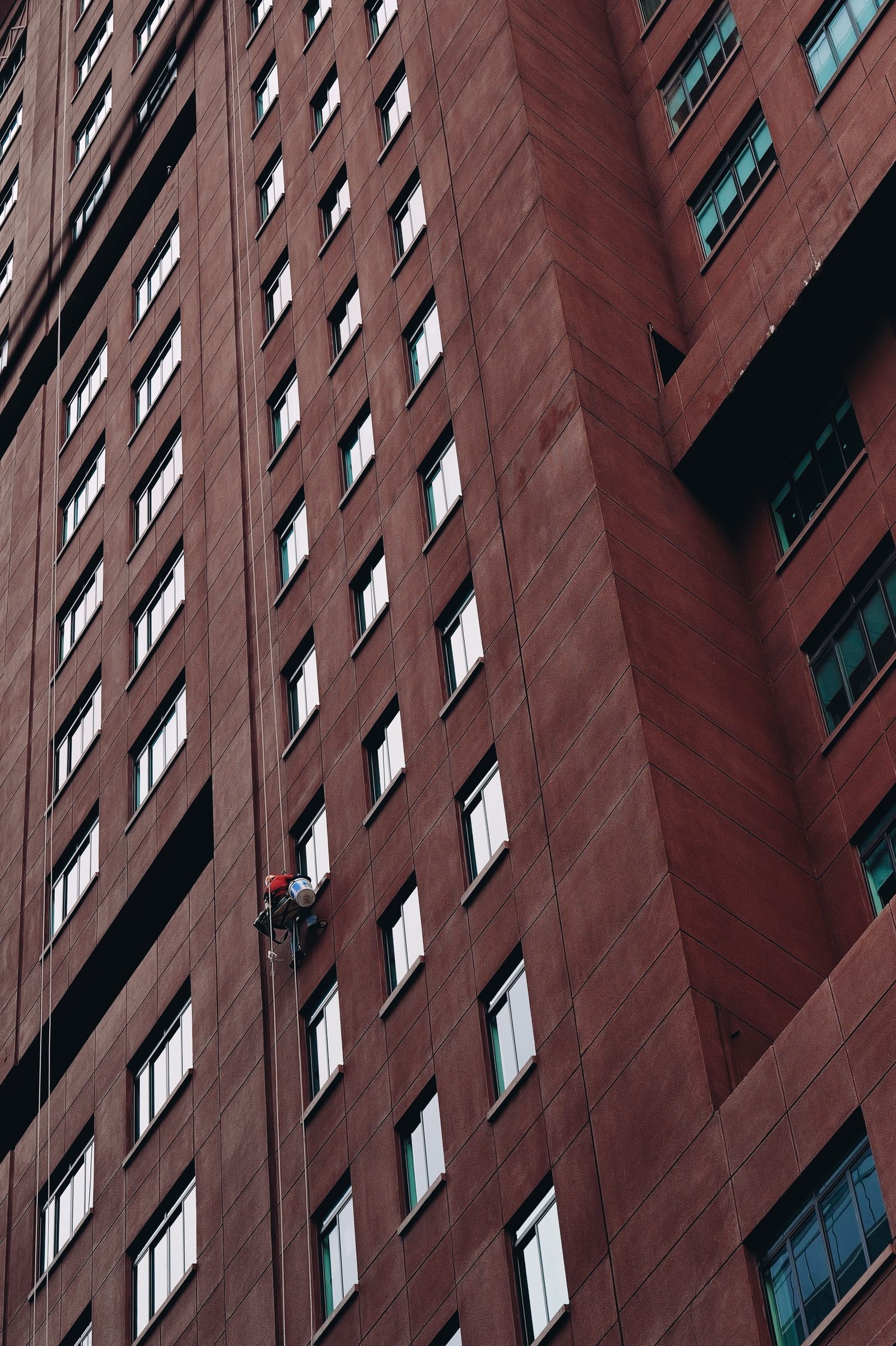
A fixed quarterly or annual package can sound convenient, but it may spend money on protected walls while a guest entrance, canopy, street face, or loading elevation needs attention sooner. The first service should function as a measured reset. Closeout photographs can show what released, what remained, how the surface dried, where runoff reintroduced residue, and which areas required a separate access method. A follow-up review at an agreed point lets the property team compare actual resoiling rather than buying a schedule based on assumptions.
The resulting program may use several intervals. A hotel arrival canopy or retail sign band might be checked more often than broad upper cladding. A shaded courtyard can be monitored for returning organic growth while an exposed wall remains acceptable. Upper glass rinsing may sit between periodic contact window cleanings, with the scope stating that rinsing does not provide squeegee detailing, scraping, edge work, or hard-water restoration. Entrances can receive targeted service without mobilizing for every roofline feature. Condition-based triggers are also useful when construction, unusual bird activity, a drainage repair, or a tenant event changes the normal pattern.
- Create a photographic baseline during the initial reset.
- Review how priority areas look after a real weather and occupancy cycle.
- Assign separate intervals to entrances, glass, canopies, and broad facade fields.
- Reassess the method after repairs, construction, or a material change.
Fit production around Seattle neighborhood operations
Downtown and Belltown properties can place active sidewalks, garage entries, hotels, offices, retail, transit activity, deliveries, and curb demands against the same facade. South Lake Union and Denny Triangle often add mixed office, laboratory, residential, and street-level retail schedules. Capitol Hill and the University District bring long operating hours, dense pedestrian movement, restaurants, residences, and event peaks. Ballard combines neighborhood retail with maritime and industrial activity, while SODO and Georgetown can add truck routes, loading docks, shift changes, yards, rail or utility constraints, and large wall areas. These patterns help frame questions, but only a site review establishes workable controls.
The property calendar should drive the work window. A useful plan identifies tenant arrival, hotel check-in, restaurant setup, trash collection, loading appointments, garage peaks, security procedures, quiet hours, and any event that changes pedestrian or vehicle volume. Active work can be phased by elevation or vertical zone to preserve entrances and accessible travel. The proposal should state equipment and hose routes, controlled areas, spotters or ground personnel, reopening criteria, and who has authority to pause work when an unplanned delivery or public movement enters the zone.
Seattle's wet conditions make the closeout window operationally important too. Water can continue draining from joints, ledges, frames, canopies, and roof edges after application ends. Barriers should not disappear simply because the cleaning pass is complete. Pavement, stairs, ramps, loading plates, and entrance mats need a final check for pooled water, residue, or slip conditions. When temperatures approach freezing, when wind moves spray beyond control, or when incoming rain would overwhelm water controls, postponement can be the responsible service decision.
Treat drone assistance as a conditional access option
Drone-assisted application can be useful on selected broad upper fields when the approved cleaning process works from a practical stand-off distance and the operating team can maintain control. It may reduce the need to place a lift at every point of a compatible wall. It cannot brush recessed joints, scrape glass, squeegee panes, repair sealant, evaluate hidden deterioration, or create contact pressure where a bonded deposit requires it. Deep balconies, fins, overhead wires, narrow alleys, projecting signs, rooftop equipment, mature trees, and complex setbacks can limit useful positioning or water delivery even when the wall is visible from grade.
Feasibility also depends on current FAA requirements, the exact airspace, aircraft and pilot status, visual line of sight, operations around people or moving vehicles, launch and recovery space, property permission, and site-specific hazards. Seattle addresses can be influenced by controlled airspace and nearby aviation activity, so the location must be screened rather than assumed. B4UFLY and FAA commercial-operator resources are useful starting points, but the operating team remains responsible for the requirements that apply to the proposed flight. Property approval does not supply an airspace authorization or permission to occupy neighboring or public property.
- Screen the exact address, work zone, airspace, weather, and ground footprint.
- Use direct access where the finish requires agitation, scraping, or detailed glass work.
- Coordinate flight boundaries with pedestrian, vehicle, hose, and wash-water controls.
- Keep a non-drone or postponed option available when feasibility changes.
Make wash-water control part of every recurring visit
Exterior cleaning water can collect atmospheric soil, organic material, bird residue, loose coating particles, oils from a loading area, metals from facade runoff, and cleaning products before reaching grade. Seattle Public Utilities requires businesses to use source controls for activities that can pollute the drainage system, and the current Seattle Stormwater Code and Manual provide the governing local framework. A recurring scope should therefore map drains, scuppers, roof leaders, trench drains, curb inlets, sumps, landscaped areas, low points, and routes toward neighboring property each time the setup changes.
A grate's location or appearance does not prove its destination. Seattle properties can contain storm, sanitary, combined, private, sump, or treatment connections, and previous alterations may not be obvious at the surface. The proposed disposition route should be confirmed from reliable property information and, where needed, current direction from Seattle Public Utilities, King County Industrial Waste, another responsible utility, or a qualified environmental professional. Calling a product biodegradable, a rinse purified, or recovered water filtered does not by itself establish where the resulting wash water may go.
Recurring work improves control only when records follow the site. The service file can preserve the known drain map, approved staging assumptions, control sequence, product information, observed bypass points, and disposition decision. Each visit still needs a field check because construction, damaged pavement, blocked drains, new landscaping, rainfall, or a moved dumpster can alter the path. The related Seattle wash-water planning guide offers a deeper checklist for property teams that need to document those decisions before requesting service.
Request a Seattle maintenance quote built for your building
A strong quote starts with useful property information. Send Drone Building Cleaners the Seattle address, current photographs of every requested elevation, approximate height, known facade materials, visible stain locations, priority entrances, water availability, preferred work windows, and known drain information. Flag operable windows, air intakes, rooftop or facade work, failed coatings, cracks, leaks, historic status, sensitive landscaping, overhead utilities, loading routes, patios, valet lanes, and areas that cannot be closed. Include the finish you need, such as reducing green growth on a shaded wall, improving a guest-facing canopy, rinsing compatible upper glass, or coordinating several exterior zones under one maintenance plan.
We will use that information to define what requires a site visit or test, which areas are good maintenance-cleaning candidates, where another access method belongs, and what should be excluded for specialist review. The proposal can identify surfaces, methods, access assumptions, water controls, weather limits, operating windows, expected improvement, documentation, and options for repeat service. Request a recurring commercial exterior maintenance quote when you want a Seattle plan tied to your actual moisture patterns and business schedule. You will know what is included, what conditions can change the plan, and how the next visit will be informed by the last one.